
A moving company owns the trucks and employs the crews that handle your belongings. A moving broker is a sales agent who sells your move to a third party. The difference is critical: carriers provide accountability and fixed pricing, while brokers often lead to “ghost broker” scams, hidden fees, and a broken chain of custody.
It can be surprisingly easy to be misled by bad actors, especially online. In this guide, Nelson Markesbery shares how to tell the difference between moving brokers and moving companies and avoid costly middleman scams.

Ghost Brokers: The Rise of Moving Middleman Scams
As we move through 2026, the moving industry has seen a sophisticated surge in what experts call “ghost brokers.” These entities are not moving companies; they are high-tech lead-generation machines. They spend thousands on Google Ads targeting keywords like “best Cincinnati movers” or “affordable long-distance moving NKY,” posing as legitimate local businesses to capture your attention and your deposit.
The ghost broker model is simple but dangerous. They present a polished website filled with stock photos of smiling families and shiny trucks they don’t actually own. Once you sign a contract and pay a hefty “reservation fee,” they go behind the scenes to find the cheapest possible third-party carrier to actually perform the move.
They essentially “ghost” the transaction once they have their commission, leaving you with a mover you never vetted and a contract that may not be honored.
The Risks of Hiring a Ghost Broker
- Hostage Loads: The third-party carrier arrives and demands thousands more in cash before unloading your items.
- Zero Accountability: If an heirloom is broken, the broker blames the carrier, and the carrier blames the broker.
- Safety Gaps: You have no way of knowing if the crew entering your home has been background-checked or drug-tested.
- Insurance Failures: Many brokers lack the proper cargo insurance required to protect high-value household goods.
2026 Red Flags to Watch For
Before you provide your email or phone number for a white, look for these warning signs of moving scams on the company’s website:
- No Physical Address: They list a “service area” but no brick-and-mortar warehouse or office.
- Generic Branding: A name like “USA Direct Pro Movers” with no mention of local history or specific local staff.
- High Upfront Deposits: Legitimate moving carriers like Nelson Markesbery won’t require massive deposits to book a date.
- Missing USDOT Numbers: If you can’t find a USDOT number in the footer of their website, they are likely unlicensed.

How the 50-Mile Visual Survey Rule Defends Against Middleman Scams
One of the most powerful tools for consumer protection is the Federal Motor Carrier Safety Administration (FMCSA) 50-mile visual survey rule. Under federal law, if a moving company’s physical location is within 50 miles of your home, it must offer a visual survey of your household goods before providing a binding moving estimate.
A visual survey is exactly what it sounds like: a professional move coordinator walks through your home—checking every closet, the attic, and the garage—to accurately calculate the weight and volume of your shipment. This process ensures that your final price is based on reality, not a guess over the phone.
At Nelson Markesbery, we simplify this process with remote virtual surveys. A video walkthrough enables us to accurately assess the cost of your move and provide an accurate estimate that we won’t change on you further down the road.
Why Middleman Scammers Avoid the Visual Survey
Ghost brokers hate this rule because they don’t have local staff to send to your home. In 2026, many will try to bypass this by insisting that a “phone inventory” is just as accurate. While virtual surveys via smartphone are common, the failure to offer the visual survey is a sign that you may be dealing with a middleman scam.

The Truck Branding Litmus Test
Even if everything looks good on paper, the most critical moment of your move is when the truck pulls into your driveway. In the “bait-and-switch” scam, a broker might give you a professional-looking estimate, but an unmarked white box truck with a different company name shows up on moving day.
Follow This 4-Step Checklist on Moving Day
- Check the Door: Locate the USDOT and MC numbers printed on the side of the truck cab.
- Verify the Paperwork: Compare the numbers on the truck to the numbers on your Estimate and Bill of Lading.
- Confirm the Name: Ensure the company name on the truck matches the “Doing Business As” (DBA) name on your contract. If the truck says “Bob’s Logistics” but your contract is with “Cincinnati Elite Movers,” ask for clarification immediately.
- The Pause Button: If the branding or DOT numbers do not match, do not let them start loading. Call the move coordinator listed on your original estimate to verify the crew’s identity.
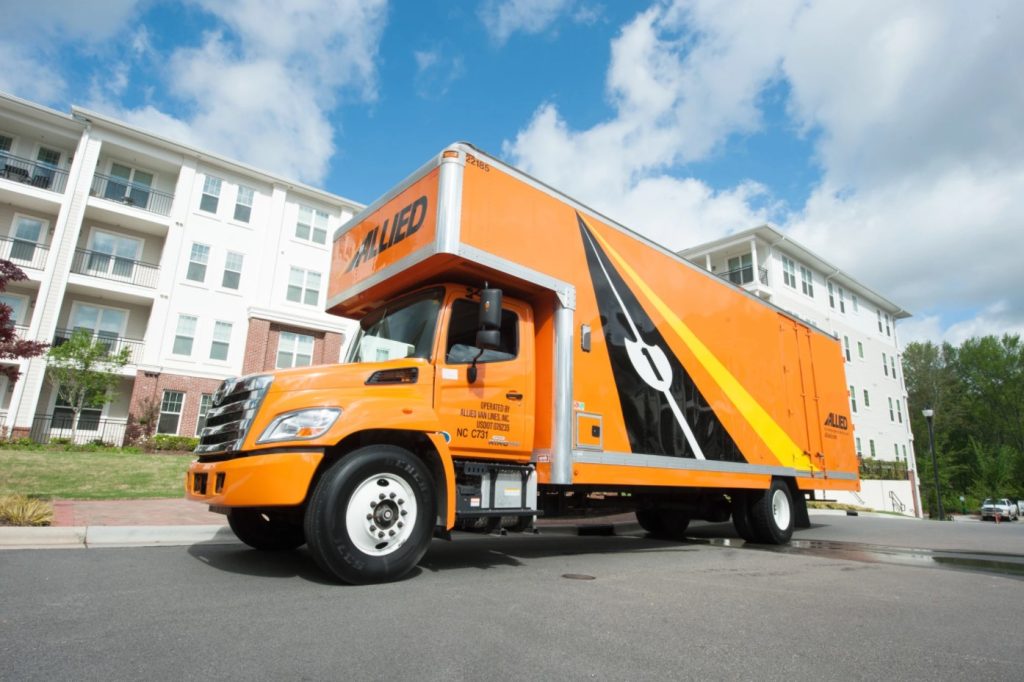
As a dedicated Allied Van Lines agent, Nelson Markesbery provides a seamless brand experience. Our trucks and paperwork carry the Allied and Nelson Markesbery credentials, ensuring that the company you hired is the company doing the work.
Why Choose a Moving Carrier vs. a Moving Broker
For families moving across the country or executives managing a Cincinnati corporate relocation, the stakes are too high for “maybe.” When you work with an asset-based carrier like Nelson Markesbery, you aren’t just a line item on a broker’s spreadsheet.
Our deep roots in the Greater Cincinnati and Northern Kentucky market mean we understand the logistics of the I-75/I-71 corridor. We maintain a local warehouse where your goods can be safely stored if your new home isn’t ready. Most importantly, we maintain a strict chain of custody. A verified moving carrier ensures:
- Chain of Custody: Your belongings stay within the Allied Van Lines network from origin to destination.
- Consistent Crews: Our movers are background-checked, uniformed professionals, not day laborers found by a broker.
- Accurate Valuation: We offer clear valuation coverage options that are legally binding and handled directly by our claims department.
- Single Point of Contact: You have one move coordinator to call, not a maze of broker hotlines.
Move With Confidence, Not Uncertainty
In 2026, your skepticism is your greatest asset. High-stakes moves require more than just a low price; they require a partner who is willing to stand behind their work with physical assets and decades of local reputation.
At Nelson Markesbery Moving and Storage, we believe in radical transparency. Whether you are moving a 5-bedroom home to the West Coast or relocating your company’s headquarters, we provide the documentation and the “boots on the ground” to ensure your move is scam-free.
Moving Carrier, Moving Broker, and Middleman Scam FAQs
A moving carrier owns the assets (trucks, equipment, and warehouses) and employs the labor. A broker is a licensed intermediary that arranges the transportation by hiring a carrier. To verify, look for a USDOT and MC number on the company’s website and check the FMCSA SAFER database; if the “Entity Type” is listed as “BROKER,” they are not the ones moving your van.
Not necessarily, but it adds a layer of risk. For high-stakes moves like corporate relocations or long-distance household moves, using a broker often results in a loss of “chain of custody.” You lose the ability to hold a single company accountable for delays or damages.
An MC (Motor Carrier) number is a unique identifier issued by the FMCSA to companies that transport passengers or federally regulated commodities across state lines. It is proof that the company has the legal authority to operate as a moving business.
Visit the FMCSA Protect Your Move website. Enter the company’s USDOT or MC number. You should see an “Active” status for both Operating Authority and Insurance (BIPD and Cargo).
The most effective method is to choose a company with a physical local presence. Visit their warehouse in Cincinnati or NKY. A ghost broker will only have a virtual office or a P.O. box, whereas a carrier will have a fleet of trucks on-site and a staff you can meet in person.
Ready to See the Difference a Trusted Local Moving Carrier Makes?
Don’t leave your legacy at the risk of a middleman scam. Choose the local experts who have been moving Cincinnati and Northern Kentucky for over a century. Reach out to Nelson Markesbery today to get started.
